
How do I prepare for embryo transfer?
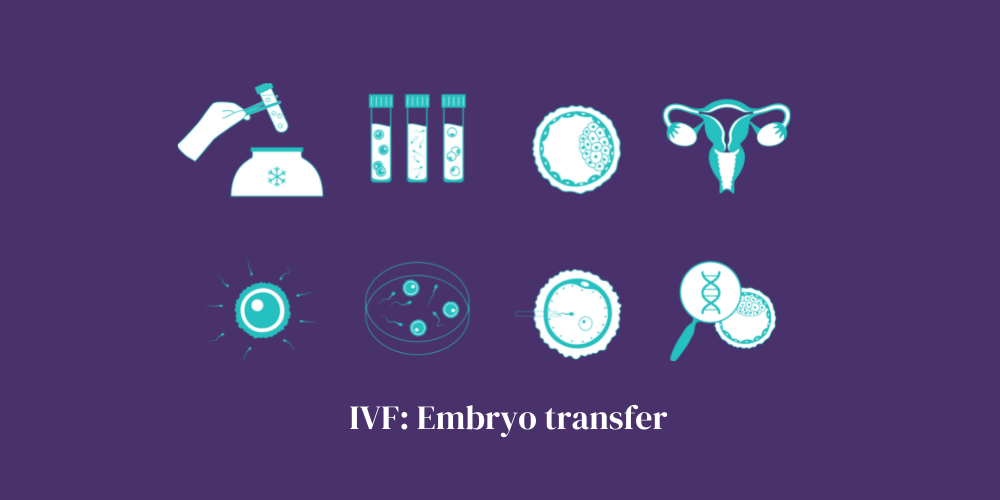
You can make sure your embryo transfer goes as smooth as possible by planning ahead so that the experience is as stress-free as possible. Below are a few tips for your embryo transfer: Time how long it will take to travel to the clinic and plan your journey. Arrange to have someone accompany you to […]
Embryo transfer FAQ

What is the difference between a natural and medicated frozen embryo transfer (FET) cycle? Two types of approaches are used in embryo transfer for monitoring and preparing the lining of the uterus for transfer. These include a natural frozen embryo transfer (FET) cycle and a medicated frozen embryo transfer cycle. FET treatment involves transferring the embryo at the ideal time in the ovulation cycle and when the lining of the uterus is at the right […]
Embryo transfers: what you need to know
Embryo transfer is the last stage of your IVF treatment and takes place following the fertilisation of your eggs by IVF or ICSI. Once the eggs are removed from your ovaries following stimulation with fertility medication, they are fertilised in the lab to form an embryo. The embryo is then transferred to your uterus. What […]
What is the ideal BMI for IVF?

The National Institute for Health and Care Excellence (NICE) guidelines recommend that a woman’s body mass index (BMI) should be in the range of 19 – 30 to be eligible for NHS treatment (read more). However, studies show that women who are overweight (BMI between 25-30) have a reduced success rate with IVF. The lower […]
Can you increase your AMH levels?

AMH levels reflect a woman’s ovarian reserve (egg supply), which decreases with age. This means a low AMH level is reflective of low ovarian reserve. Some studies suggest that vitamin D and dehydroepiandrosterone (DHEA) supplementation may increase AMH levels. However, there is not enough evidence to show that these are effective at increasing chances of […]
How to check my fertility?
If you are worried you might be having problems conceiving, or if you have been trying to conceive for more than one year without success, you should consider to have your fertility checked. Tests and scans for women Checking your hormone levels Hormone level tests may include a blood test to measure a hormone called progesterone, […]
Diet and nutrition when trying to get pregant

We have the best chance of conceiving and having a straightforward pregnancy when we are healthy. We can’t control everything relating to our fertility, but this is one area where you can really take charge. By making healthy diet and lifestyle choices you can maximise your pregnancy potential. Plan ahead and, where possible, make necessary adjustments well ahead […]